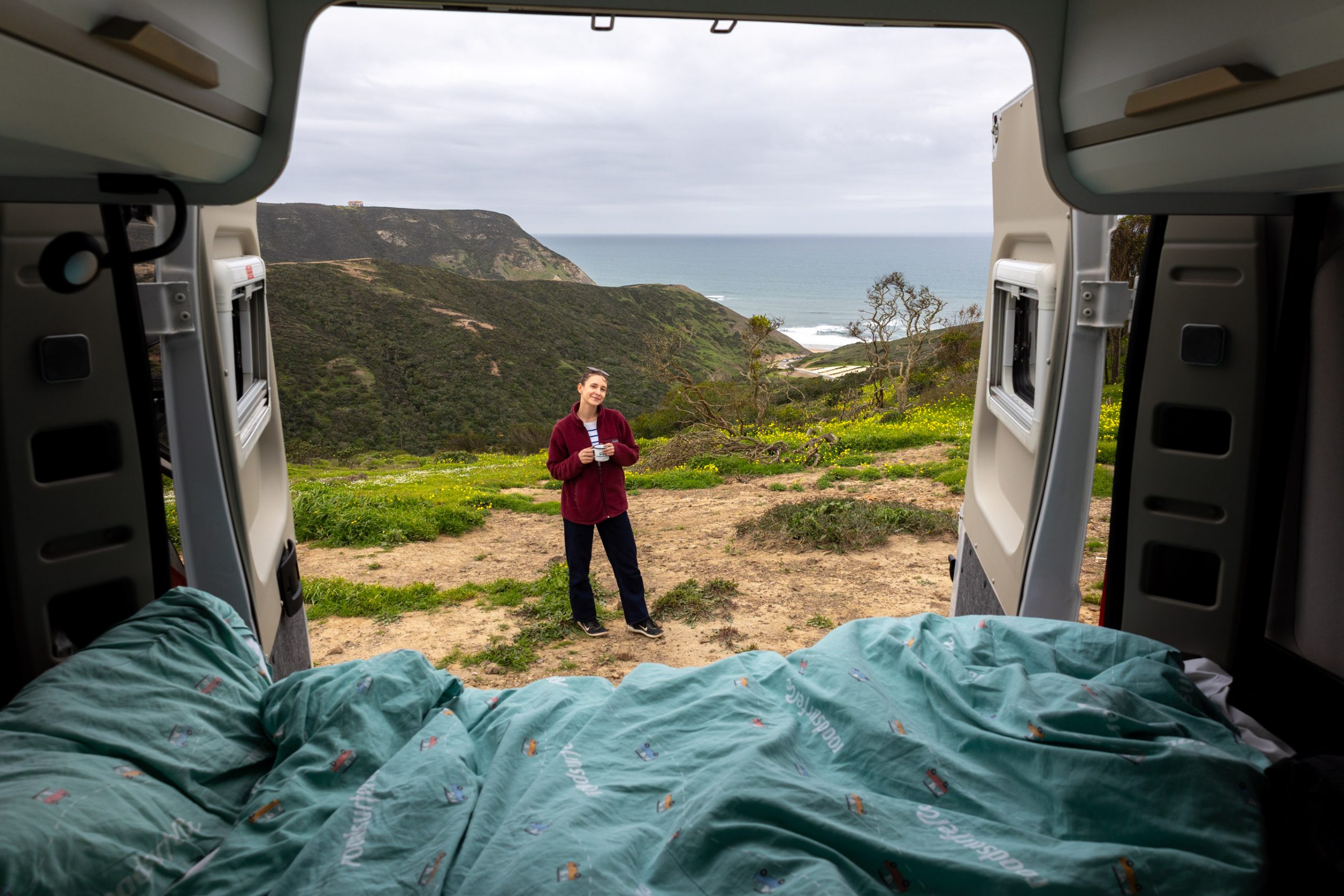
Waking up in the morning and just starting the day without knowing where I’d end up that evening. That’s how I imagined my 7-day trip to Portugal by campervan.
To be honest, my road trips usually look very different: hotels, rental cars, lots of research in advance and everything booked ahead of time. But Portugal by campervan was meant to be different. I wanted to pull over whenever a place caught my eye, discover wild beaches, watch the sunset right by the ocean or simply sit and watch surfers ride the waves.
Of course, the Algarve is hardly a hidden gem anymore, and campervan travel in Portugal isn’t exactly new either. That also means there are a few rules and practical things you should know before you go. In this post, I’m sharing my eight most important tips for camping in Portugal. It‘s a mix of practical advice and personal experiences to help you explore the Algarve (or any other beautiful stretch of the Portuguese coast) at your own pace.
For transparency: In this post about portugal by campervan, I use advertising links, also known as “affiliate links.” These links direct you to products or services that I personally recommend. If you make a booking through one of these links, I may receive a small commission. This support helps me greatly to continue providing my blog articles, photos, and videos free of charge. There are no additional costs for you.
table of contents
1) Renting your campervan in Portugal
1 Nacht in Rabat
For my trip through Portugal by campervan, I teamed up with roadsurfer and tried out their Road House model. For my road trip along the Algarve, the Faro pick-up station was perfect. It’s about 15 minutes from the airport and easiest to reach by Uber for roughly €10.
Prices for the Road House start at €89 per night. The base package comes with camping chairs, a water canister, power cable, levelling aids, unlimited mileage, full insurance, and support in English or German. On top of that, I booked a camping stove, kitchen box, bedding, and a second driver.
Since I was travelling in winter, having a reliable heater for chilly nights and air conditioning for warmer days was essential. Happy to report: the heating in my Road House campervan worked like a charm on my roadsurfer trip! I truly had a great experience!
Renting with roadsurfer was super relaxed. Portugal was only my third campervan trip, so having a detailed briefing was really important for me. And I fired off pretty much every question I could think of! Through your roadsurfer account, you get a clear checklist covering everything from pick-up and drop-off to things you need to know on the road: how to empty the toilet and greywater, how to set up the table, or turn on the gas.
The Road House can technically fit four people thanks to the pop-up roof, but in my experience it’s perfect for two. Having a toilet and shower on board is absolute luxury, though I imagine it would get a bit tight with four people.
- roadsurfer pick-up stations are closed on Sundays, and you’ll need to return your van to the same station you picked it up from. Rules can vary slightly depending on the country.
2) What documents do you need for Portugal by campervan?
Before you pick up your van, it’s worth double-checking all your paperwork. Nothing worse than arriving at the station and hitting a last-minute hiccup! For Portugal, make sure you have the following ready:
- Driver’s licence: Always check that it’s valid. Some countries require an international driving permit for non-EU licences, but for Portugal, my Austrian licence and the UK licence of my co-driver worked perfectly.
- Passport or ID card: roadsurfer will want to see your original at pick-up and will take a photo of the main driver’s documents.
- Copies of your documents: It’s handy to keep a digital copy of your licence, passport (and vaccination card, if needed) on your phone, just in case anything goes missing while you’re on the road.
- Credit card: You’ll need a credit or debit card for the deposit. For me, it was €800 for the Road House, which was refunded automatically a few days after I returned the van.
- Insurance: Basic insurance comes with roadsurfer, but I booked the Maximum Protection package for peace of mind. In hindsight, it was a good call, I returned the van with a few minor interior marks.
- Travel insurance: Especially if you’ll be active—planning coastal hikes or going surfing, it’s worth having solid coverage. I use the travel insurance from SafetyWing, mainly because of its flexibility, transparency, and the Adventure Add-on for all kinds of outdoor activities.
- Speichere Dir den Post auf Deinem Pinterest Board

3) The best time to visit Portugal by campervan
2 Nächte in Fes
3,5 Stunden Fahrt von Chefchaouen, 200 km
If you’re planning to explore Portugal by campervan, I’d definitely recommend the shoulder or low season. Spring (March – April) and autumn (September – November) are perfect if you want good weather but want to avoid the crowds. My personal favourite, though, is winter (December – February). At this time, it’s quiet, the beaches are almost empty, and you can explore Portugal at a relaxed pace. This makes it the ideal time for campervan newbies or anyone wanting a peaceful coastal experience.
When I visited in February, daytime temperatures were really pleasant. I could sit in the sun outside, even jump into the sea, and at night the van was often comfortable without the heating. Surfers and Europeans spending the winter in Portugal were around, but overall it was quiet enough to really enjoy the trip.
The high season (June – August), on the other hand, can be pretty stressful. Campervans are packed in close together, free spots at viewpoints or beaches are scarce, and even a short stop to watch the sunset can become frustrating. Plus, the risk of fines if you try a bit of “wild camping” goes up. Enforcement is strict, and many locals get annoyed by the sheer number of campervans at popular spots.
4) Can you park a campervan anywhere in Portugal?
Vanlife is this romantic idea: sitting outside your van with a glass of wine, watching the sun set over the coast, and drifting off to sleep with the sound of the Atlantic waves. Sounds like pure freedom, right? Unfortunately, it’s not quite that simple in Portugal. Wild camping is officially prohibited, and if you get caught, fines can be up to €250. Locals are also getting increasingly fed up with the sheer number of campervans. Since 2021, you’re generally allowed to park in the same spot for a maximum of 48 hours, but there are plenty of exceptions: nature reserves, designated coastal areas (POOC), or municipalities with their own campervan restrictions are off-limits.
That doesn’t mean you have to give up all freedom. During the day, it’s perfectly fine to pull over by the sea for a coffee or to enjoy the view. For overnight stays, there are three main options:
- Campsites: Along the Algarve, there are plenty of traditional campsites by the beach, near nature reserves, or close to small towns. In the shoulder season, they’re relaxed, even though many retirees spend the winter in Portugal and some sites can still be busy. Pitchup is a great tool to get an overview of available spots.
- Private legal “wild camping” spots: If you want a bit more seclusion but still legally, there are providers like roadsurfer Spots offering pitches on private land. They aren’t necessarily cheaper than regular campsites, but the locations are beautiful and give you that “wild camping” feeling. Last-minute bookings worked perfectly for me. Another brilliant option is Portugal Easy Camp, where you stay on the land of farmers or winemakers and in return buy a local product. A lovely way to support the region if you ask me.
- Freestanding at your own risk: I also used the Park4Night app, where fellow vanlifers share experiences of public spots, car parks, or places with sea views. This comes with a degree of risk: always check for signs, avoid obvious no-camping areas, and if in doubt, opt for an official site.
- Especially if you decide to stay at unofficial spots: no open fires, always dispose of your rubbish properly, avoid nature reserves, keep the noise down, and be respectful to neighbours. The cleaner and more considerate you are, the more likely it is that others will tolerate campervans staying there in the future.
My favourite spots along the Algarve for inspiration (or to follow my route):
Quinta do Sol Poente (near Lagoa)
Super warm host and a really personal atmosphere. There’s no self check-in, so make sure to call ahead or send a WhatsApp message so someone is there to welcome you.
Aguas Vivas Camping (near São Teotónio)
A very friendly, quiet campsite run by Germans. You quickly notice that many guests are regulars who keep coming back.
Camping Casa Savana
If you arrive at night, the place can feel a bit eerie. In daylight, though, you’ll see how beautiful and cosy it actually is. Great showers and super lovely hosts who speak German, English, and Portuguese.
Parque Orbitur Sagres (near Sagres and Cabo de São Vicente)
A really great campsite with very clean facilities. The location in a pine forest is gorgeous, and there’s a small café plus little cabins if you ever want to spend a night not sleeping in the van.
Algarve Motorhome Park (right by Praia da Falésia)
A lot of long-term campers spend the winter here, but the location is simply unbeatable, right next to one of my absolute favourite beaches in the Algarve. If you get a pitch further back, even better, but wherever you are, you can reach the beach directly from the site. The facilities are very clean, but make sure to bring coins: showers and toilets only work with 50-cent and 1-euro coins. The same provider also rents spots in Silves and Tavira, but I haven’t personally tested those.
5) What is the best route for a trip with your campervan in Portugal?
Honestly, having a fixed route on a campervan trip in Portugal isn’t really necessary and that’s part of the fun! Just wake up, see where you feel like going, and hit the road. That said, it’s still worth having a rough idea of a region you want to explore. Otherwise, you’ll end up chasing one highlight after another and miss out on the chilled, carefree side of vanlife.
For my trip, I chose the Algarve along the south and southwest coast. It had been on my bucket list for ages and offered the perfect mix for seven days: beautiful nature, beaches, short hikes, and charming coastal towns.
- You can read my 7-day Algarve itinerary here and use it directly for planning your own trip.
Plan your route flexibly and always leave enough buffer for spontaneous stops. The Algarve coast constantly tempts you to pull over somewhere, dip your feet in the sea, and simply enjoy the moment. In peak season, though, it’s worth booking campsites or private pitches in advance, otherwise things can get stressful quickly. For me, that’s another big advantage of the shoulder season: more relaxed, less crowded, still plenty of sun and sea, and usually no need to reserve ahead of time.
Navigation in Portugal works perfectly fine with Google Maps, but I’d recommend downloading the maps offline beforehand. That way, if you ever lose signal, you’re on the safe side.
6) Tips for driving around Portugal by campervan
Driving a van in Portugal is generally pretty relaxed, but there are a few things you’ll want to know.
Traffic rules & speed limits:
Portugal follows the standard European system: drive on the right, overtake on the left, and speed limits are in km/h. Campervans have specific limits (unless otherwise indicated):
- Urban areas: 50 km/h
- Outside towns: 90–100 km/h
- Motorways / highways: 100–120 km/h (depends on your vehicle’s weight and the type of road)
Toll Roads:
Toll roads can feel a bit confusing at first. Many Portuguese highways no longer have traditional toll booths, the system is mostly electronic. You just drive through, sometimes without even realising it, and the fee is recorded automatically.
Basically, any motorway you use will likely be tolled. That said, some of the most scenic Algarve routes stick to smaller coastal and country roads, which are often toll-free.
During my trip, I never had to stop to pay. Campervans with Portuguese plates from roadsurfer are usually registered in the electronic toll system. Charges are then automatically billed via the rental company or the card you’ve registered. Always ask at pickup to make sure you know how your provider handles it.
Alcohol: 0.5 g/l for regular drivers, 0.2 g/l for beginners. Honestly, just stick to zero alcohol as the driver
Mandatory equipment in the van:
In Portugal, you must carry:
- High-visibility vest
- Warning triangle
- First-aid kit
My roadsurfer campervan came fully equipped with all of these, which made things super easy and gave me an amazing experience.
Parking in Portugal with a campervan:
Parking a campervan in Portugal is actually pretty easy once you know the basics and plan ahead a little. In general, you can park in normal car parks as long as your van fits within the lines and there isn’t a specific ban on campervans. That said, many places, especially near popular beaches and viewpoints, have their own rules, so always check the signs carefully. Fines do happen, particularly in the Algarve, so it’s really not worth risking it.
During the off-season, I didn’t have to pay for parking once, and with fewer vans around it felt much more relaxed overall. In summer, though, I can imagine it being a completely different story, with many spots filling up quickly.
One thing that’s important to understand: parking and overnight camping are not the same thing legally. Parking somewhere during the day to go for a swim, grab a coffee, or enjoy the view is usually fine. But the moment you put out chairs or open the awning it’s considered camping and that’s generally only allowed on official campsites or designated motorhome areas.
Driving a van into cities can also be surprisingly stressful. Narrow streets, limited parking and height restrictions in car parks make it tricky. That’s why I personally avoided bigger cities like Faro, Lisbon and Porto with the van. If you’d like to visit them, it’s much easier to park outside the centre and either walk in, take public transport or just hop in an Uber.
A few tips from my own experience:
- Use large supermarket car parks for short stops, they’re usually quite relaxed
- Check Google Maps reviews beforehand to get a feel for the parking situation.
- Avoid old towns with narrow streets, even if they look close on the map.
- Visit popular spots early in the morning or later in the afternoon to beat the crowds.
7) Practical tips for your trip around Portugal by campervan
To keep your road trip relaxed, it helps to keep a few more practical things in mind. A lot of it sounds obvious, but it can make a huge difference on the road:
Food:
For your first big shop after arriving, supermarkets like Lidl, Aldi or Intermarché are great options. You’ll find everything you need for a few days in the van, from fresh fruit and veggies to snacks for the road. If you’re trying to keep an eye on your budget, I’d probably avoid the Apolónia supermarkets in the Algarve. The selection is excellent, but the prices definitely reflect that. I popped in for a “quick” shop and somehow walked out €50 poorer with just a few basics.
In a campervan you also won’t have an oven, usually just a gas stove and limited storage space. So it’s worth planning simple meals that are quick to cook and don’t create loads of washing up.
Water, electricity & charging devices:
You can refill fresh water at campsites or at dedicated service stations. The app Park4Night is really helpful for finding suitable spots. Electricity usually comes via shore power hookups on campsites and campervan pitches. If you plan to wild camp more often, a power bank or inverter is very useful for charging your camera, drone and other devices. I also found a multi-plug adapter incredibly handy in the van.
Grey water, toilet & waste disposal:
At the beginning I felt a bit overwhelmed by all the “van life” topics like grey water and cassette toilets, but honestly, it’s much less complicated than it sounds.
Grey water is simply the wastewater from your sink and shower. You’re not allowed to dump it just anywhere, only at official disposal points on campsites or designated service areas.
The toilet works with a cassette that needs to be emptied regularly at designated disposal stations. There, you can rinse the cassette with a separate hose. And yes, that hose is only for cleaning the toilet cassette, not for filling up fresh water (very important distinction). Fresh water is always filled at a different station. It might sound a bit unpleasant at first (and it’s definitely not my favourite task), but you get used to it surprisingly quickly. Most rental companies like roadsurfer also provide the necessary toilet chemicals. After emptying, you simply add a bit into the tank to keep everything hygienic and odour-free.
Offline navigation:
Even though I had pretty good signal across most of the Algarve, it’s still worth downloading offline maps on Google Maps before your trip. Especially around remote beaches or smaller coastal roads, reception can suddenly drop and you’ll be glad you planned ahead. It’s also a good idea to check in advance whether your camper has Apple CarPlay or Android Auto and bring the right charging cable. It makes navigating on the road so much more relaxed.
Little things that make a big difference:
Two towels per person (one for showering, one for the beach) and one or two dish towels are genuinely useful. Earplugs (wind and waves can be louder at night than you expect) and, depending on the season, an extra blanket can also be absolute lifesavers. Flip-flops for campsite showers, a small sponge, rubbish bags and a cleaning cloth will save you a few last-minute supermarket runs, too.
Extra tip for the start:
Have a quick look around the pick-up station when you collect your van. Other travellers often leave behind basics like washing-up liquid, salt & pepper, rubbish bags or toilet paper. You can usually take these for free. This is a more sustainable start and one less thing to worry about on day one of your road trip.
8) How much does a campervan trip in Portugal cost?
The total cost really depends on how you travel: how often you eat out, which extras you choose for your van, and how many kilometres you cover. To give you a rough idea, here’s what I spent for 7 days in the Algarve for two people:
- Flights from London to Faro and back (last minute, UK school holidays): €250 per person
- Campervan (Road House) with extras: €1,050 with roadsurfer
- Included: kitchen box, 2x bedding sets, camping stove, full insurance (Maximum Protection)
- Deposit: €800 (refunded after return)
- Groceries: €130 for 2 people
- Eating out: €180 for 2 people
- Activities: €35 per person (e.g. quad bike tour, boat tour)
- Campsite fees: €120 for 2 people
- Uber from airport to pick-up station: €20 for 2 people
- Diesel: €100 for the whole trip
Total: €2,170 for 2 people, so about €1,085 per person.
If you cook more often and stay at cheaper campsites (or travel in the low season), you can definitely do it for less.
I did have a small issue with my van‘s grey water tank along the way and couldn’t empty it as easily as usual. roadsurfer were incredibly helpful, but it also meant I had to be quite careful with water usage, which in turn meant I only cooked in the van once or twice. Little things like that can subtly influence your overall budget.
And that’s it, my 8 most important tips for travelling through Portugal by campervan! I hope my experiences help you plan your own road trip, whether you’re exploring the Algarve or hopping between little coastal towns.
If you still have questions or need a few last-minute tips, feel free to reach out to me on Instagram!

